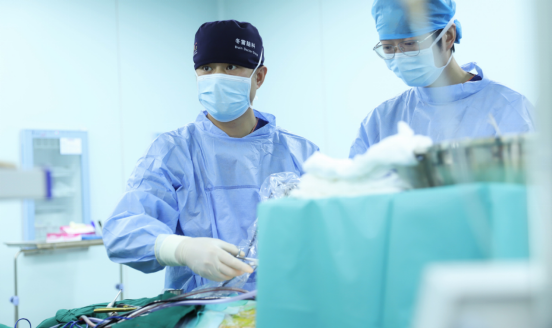
Dr. Zhang Xuejun's neurosurgery team at Shanghai Donglei Brain Hospital. (Image: Shanghai Donglei Brain Hospital)
A 10-Year
Hypertension History
Far More Dangerous
Than Elsewhere
Seek Care
Immediately
Uncontrolled
Hypertension
The Thalamus: The Brain's Deep "Core Command Center"
The human brain is like a精密 "command headquarters." The thalamus sits at its deepest, most central point — no larger than a red date. Small as it is, its responsibilities are enormous: it is the brain's "sensory relay station," where touch, pain, temperature, vision, and hearing from all over the body are first processed before being sent to the cerebral cortex; it is the "consciousness switch" that helps maintain wakefulness and awareness; it is the "emotion and memory steward" tied to our feelings and memories; and it is the "endocrine coordinator" that helps regulate body temperature, hormones, and other autonomic functions.
The thalamus is exquisitely "precarious." It is wrapped by important nerve fiber tracts (which control movement — damage can cause hemiplegia), sits next to the hypothalamus that regulates temperature and consciousness, and lies just above the midbrain, where brainstem nerve fibers are densest. Reaching this spot through conventional surgery has always carried extreme risk — the slightest misstep could be catastrophic. That is why thalamic surgery has long been regarded as a "forbidden zone."
A Life Hanging by a Thread: Hypertension Ignites the "Brain Core"
The patient, Mr. Wang Qiang (pseudonym), had lived with hypertension for a full ten years, but had not taken his medication regularly as instructed. At its worst, his blood pressure had exceeded 180/100 mmHg.
One day he suddenly lost consciousness and began vomiting violently, and was rushed to a local hospital. The examination revealed a perilous left thalamic hemorrhage. Although he received initial treatment, Mr. Wang ran a persistent high fever and never regained clear consciousness — his life hung in the balance. His family made the decisive call to transfer him to Shanghai Donglei Brain Hospital to seek a way out.
"The patient's thalamus was very fragile, mainly because of his long-uncontrolled hypertension. Sustained high-pressure blood flow hardens and brittles the already tiny vessels in the thalamic region, even forming tiny 'bulges' — what we commonly call aneurysms. When blood pressure spikes, these fragile vessels can rupture and bleed."
Dr. Zhang also told reporters: "Unlike other parts of the brain, a thalamic hemorrhage over 10 milliliters is extremely dangerous." It very easily compresses or destroys surrounding critical structures, rapidly endangering life.
Breaking the "Forbidden Zone": Minimally Invasive Tools Meet Masterful Skill
Facing such a thorny case, Dr. Zhang Xuejun's neurosurgery team at Donglei knew the challenge was immense. Conventional craniotomy is highly traumatic, follows a long surgical path, and struggles to reach the deeply buried thalamus safely without damaging the important neural tissue along the way. The team therefore decided to treat the patient with advanced neuroendoscopic minimally invasive technique.
Surgery "In Progress": A Millimeter-Scale "Mine-Clearing" Operation
Neuroendoscopic minimally invasive technique is like placing an ultra-thin "pipe-scope" with its own light and camera inside the brain. Through a tiny channel, the surgeon can reach the thalamic hematoma directly. Between millimeters, life and death are decided — this millimeter-scale "mine-clearing" operation inside the brain's "forbidden core" perfectly illustrates the idea that "medical progress provides the possibility; a surgeon's skill makes the miracle."
Before the operation, the team held a case-by-case discussion and meticulously designed the surgical approach. The core goal was to thoroughly evacuate the hematoma in the thalamic occipital region. Because the patient's thalamic bleed was relatively localized yet surrounded by vital structures, conventional surgery could neither protect nearby tissue well nor clear the clot effectively, and risked causing fresh, severe injury. The neuroendoscopic approach, by contrast, reaches straight into the deep lesion, avoiding the cortical or callosal damage of traditional craniotomy, and effectively protecting the brainstem and thalamus.
"During hematoma evacuation, meticulous hemostasis within the surgical field and protection of surrounding tissue are vital. Any new injury could cause hemiplegia, coma, or worse. We could not afford a single moment of carelessness."
During the procedure, the lead surgeon kept steady hands and sharp judgment, coordinating seamlessly with the assistants. While clearing the clot, he achieved extremely fine hemostasis — stopping the bleeding points while specially protecting the fragile venous system, avoiding fatal hemorrhage or venous infarction. In the end, relying on the clear field and minimally invasive corridor provided by the neuroendoscope, together with the team's masterful, steady technique, Dr. Zhang Xuejun's team successfully evacuated the lethal thalamic hematoma and protected the surrounding brain tissue to the greatest extent. Postoperatively, Mr. Wang's condition gradually stabilized, his consciousness began to return, and he was out of immediate danger.
Prevention First: Advice for Brain Health
This real case warns us that cerebral hemorrhage is not remote, and is trending younger. Protecting brain health comes down to daily habits:
- Strictly control the "three highs": patients with hypertension, hyperglycemia, or hyperlipidemia must take medication regularly as prescribed and monitor closely — this is the top priority in preventing cerebral hemorrhage;
- Avoid triggers: quit smoking and limit alcohol, eat a low-salt, low-fat diet, and avoid violent emotional swings and sudden straining (such as straining during bowel movements);
- High-risk screening: those with a family history of cerebrovascular disease or on long-term anticoagulants should have regular head CT/MRI or cerebral angiography;
- Nourish the nerves: eat a balanced diet and moderately supplement vitamin-B-rich foods (such as whole grains, lean meat, and legumes) to help maintain nerve health;
- Heed the warning signs: if sudden severe headache, vomiting, limb weakness or numbness, slurred speech, facial droop, or choking on water appears — seek care immediately, and seize the golden 3–6 hour treatment window after onset.
Key Takeaways for Patients and Families
A deep thalamic hemorrhage is one of the most dangerous forms of stroke, but modern neuroendoscopic minimally invasive technique can turn a once "forbidden" region into a treatable one. The decisive factors are early recognition, rapid transfer, and an experienced team — Mr. Wang's recovery shows how far minimally invasive neurosurgery has come. Controlling blood pressure every day remains the single best defense.
Facing a Brain Hemorrhage or High-Risk Hypertension?
Shanghai Donglei Brain Hospital provides emergency neurosurgical evaluation, head CT/MRI diagnostics, and neuroendoscopic minimally invasive evacuation of deep intracerebral hemorrhage, including for critically ill and high-risk patients.
Request a Consultation